
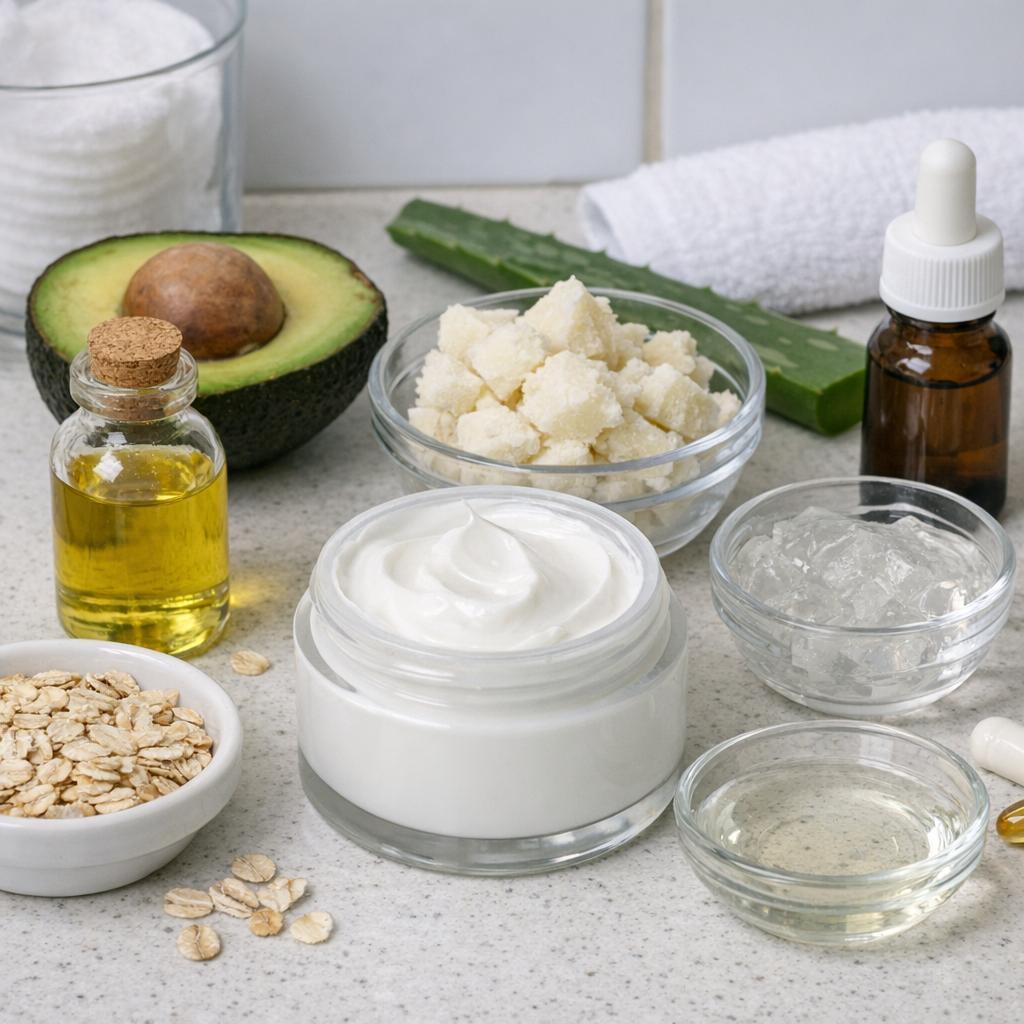
For dry or easily irritated skin, look for a moisturizer that combines water-binding humectants, softening emollients, and moisture-sealing occlusives. Ceramides, glycerin, petrolatum, dimethicone, squalane, and colloidal oatmeal are useful starting points. A fragrance-free formula with a texture you will use consistently is often more practical than the richest or most expensive product. Check the full ingredient list, introduce new formulas gradually, and seek professional advice if dryness is persistent, painful, widespread, or accompanied by a rash or other concerning changes.
What should a moisturizer for dry and sensitive skin contain?
Dryness and sensitivity can occur together, but they describe different experiences. Skin may feel tight, rough, flaky, or uncomfortable when it does not retain enough water or surface oils. Sensitive skin may sting, burn, itch, flush, or become irritated in response to products, weather, friction, or other exposures. A moisturizer cannot identify why these symptoms are occurring, but the right formula can improve comfort and reduce water loss.
Most effective moisturizers combine three ingredient groups:
- Humectants attract and hold water in the outer layers of skin.
- Emollients fill spaces between surface skin cells and make rough skin feel smoother.
- Occlusives form a surface layer that slows water loss.
Some formulas also include barrier-associated lipids, such as ceramides, cholesterol, and fatty acids, or soothing ingredients such as colloidal oatmeal and panthenol. The complete formula matters more than any single ingredient. A product with several useful ingredients may still sting if it contains fragrance or another component that does not agree with your skin.
How do humectants, emollients, and occlusives differ?
| Ingredient group | Main purpose | Examples | What to know |
|---|---|---|---|
| Humectants | Attract and retain water in the outer skin | Glycerin, hyaluronic acid, panthenol, urea | Usually work best in a formula that also helps reduce water loss. |
| Emollients | Soften rough texture and improve flexibility | Squalane, fatty acids, plant oils, esters, shea butter | Texture and tolerance vary; an oil-rich product is not automatically better. |
| Occlusives | Slow water loss from the skin surface | Petrolatum, dimethicone, mineral oil, waxes | Can feel heavier, particularly in warm or humid conditions. |
| Barrier-associated lipids | Support the lipid structure of the outer skin | Ceramides, cholesterol, fatty acids | The overall formulation matters; one listed ceramide does not guarantee performance. |
Which humectants are worth looking for?
Glycerin is a widely used humectant that can help skin feel less tight and more comfortable. It appears in products ranging from lightweight lotions to thick creams and is often suitable for sensitive skin, although individual tolerance still matters.
Hyaluronic acid, which may also be listed as sodium hyaluronate or hydrolyzed hyaluronic acid, is another water-binding ingredient. Its feel and performance depend on the form used and the rest of the formula. It does not need to be applied as a separate serum because many moisturizers already contain it. Applying moisturizer to slightly damp skin may help with tightness, but it is not required for every product. Follow the label if it gives different directions.
Panthenol functions as both a humectant and skin-conditioning ingredient and is often included in formulas designed to feel soothing. Urea is water-binding and softening, but higher concentrations may sting irritated or cracked skin. Urea products may be useful for rough body skin, while very reactive areas may need a simpler formula.
What do emollients do?
Emollients smooth the spaces between surface skin cells, helping rough or flaky areas feel softer and more flexible. Examples include squalane, shea butter, fatty acids, triglycerides, and plant-derived or synthetic oils.
Squalane is a lightweight emollient that can improve slip without the heavier feel of an ointment. It may suit people who prefer a lighter finish, but “non-comedogenic” claims do not promise that a product will work for every person or body area. If a formula appears to contribute to bumps or irritation, stop using it and reassess the complete product rather than assuming one ingredient is universally unsuitable.
Emollients can be especially useful when skin feels rough rather than only tight. They generally work best alongside a humectant and an occlusive because softness alone does not necessarily address water loss.
When are occlusives helpful?
Occlusives slow the movement of water from skin into the surrounding air. Petrolatum is a highly effective occlusive used in many ointments and protective products. Dimethicone can provide a smoother, less greasy finish while also helping reduce water loss. Mineral oil and certain waxes serve similar protective roles in some formulas.
Occlusives can be useful on areas exposed to cold, wind, frequent handwashing, or dry indoor heating. They may feel too heavy under sunscreen or during humid weather, so some people use them only on selected dry areas. A thin layer may be enough; applying more does not always improve comfort.
Are ceramides important in a moisturizer?
Ceramides are lipids naturally found in the outer layers of skin. Moisturizers containing ceramides are commonly used to support the skin’s protective surface and reduce the sensation of dryness. Some products also include cholesterol and fatty acids, which are other skin-associated lipids.
Ingredient lists may identify ceramides as ceramide NP, ceramide AP, ceramide EOP, or other designations. The presence of several types does not prove that a product will outperform a simpler formula. Concentration, packaging, stability, and the balance of the formulation are not always apparent from the label. Ceramides are therefore best viewed as one potentially useful feature rather than a guarantee of barrier repair.
A ceramide moisturizer may come as a lotion, cream, or ointment. Choose the texture according to the body area, climate, and finish you can tolerate. A lighter ceramide lotion used regularly may be more useful than a thick product that feels uncomfortable and is used inconsistently.
Should a moisturizer for sensitive skin be fragrance-free?
Fragrance-free products are often a sensible starting point for skin that stings, burns, itches, or reacts easily. “Fragrance,” “parfum,” and related terms may represent mixtures of aromatic substances. Essential oils, botanical fragrance ingredients, and citrus or floral extracts can also contribute to irritation or allergic contact reactions in some people. “Natural” does not mean non-irritating.
Fragrance-free is not the same as unscented. An unscented product may contain ingredients that mask the smell of other components. Check the actual ingredient list rather than relying only on front-label wording.
Preservatives are necessary in many water-based products to help prevent microbial contamination and should not be treated as universally harmful. However, some preservatives, including methylisothiazolinone, have been associated with allergic contact dermatitis in certain people and are regulated differently by region and product type. If a product repeatedly causes itching or a rash, the cause cannot be confirmed from the label alone; a qualified clinician may be needed to evaluate it.
What about niacinamide, colloidal oatmeal, and soothing ingredients?
Colloidal oatmeal is finely milled oat material used in skin-protectant products. It can reduce discomfort associated with dryness and may be useful in formulas for itchy or irritated skin. People with an oat allergy should ask a qualified professional whether it is appropriate for them.
Allantoin is a skin-conditioning ingredient often used in formulas intended to soothe. Panthenol is another common supporting ingredient. These additions may improve how a moisturizer feels, but they cannot establish the cause of a rash or replace care for an underlying condition.
Niacinamide can support the skin’s appearance and barrier function and is included in many moisturizers. Some people tolerate it well, while others experience stinging or flushing, particularly with stronger formulas or when skin is already irritated. A moisturizer containing a modest amount may be easier to tolerate than a high-strength serum. Consistent burning is not evidence that the ingredient is working.
Which ingredients may be less comfortable for reactive skin?
There is no universal list of ingredients that everyone with sensitive skin must avoid. However, these product features deserve additional caution:
- Fragrance, parfum, and essential oils may irritate skin or trigger an allergic reaction in some people.
- Menthol, camphor, and strong cooling ingredients can feel uncomfortable on sensitive skin.
- Exfoliating acids, including glycolic, salicylic, or high-strength lactic acid, may sting when skin is dry, cracked, or irritated.
- High amounts of denatured alcohol may feel drying or irritating, although products containing alcohol do not all behave the same way.
- Complex formulas with many botanical extracts create more potential ingredients to evaluate if a reaction occurs.
Suitability depends on concentration, the rest of the formula, the application area, and the person using it. A product that feels comfortable on the body may not be suitable near the eyes or on the lips.
How can texture help you choose?
Texture is more than a cosmetic preference. It affects how much product you apply, where you use it, and whether you can maintain the routine.
Lotion
Usually lighter and easier to spread. May suit daytime use, larger body areas, or warmer climates, but may not feel protective enough for very dry patches.
Cream
Often contains more emollients and occlusives than a lotion. A practical middle ground for many people with dry facial or body skin.
Ointment or balm
Usually creates a stronger surface seal and may protect very dry areas. It can feel greasy and may not be comfortable for every situation.
“Rich” and “light” are texture descriptions, not quality ratings. Different body areas or seasons may call for different textures. If the labels permit it and the combination feels comfortable, a lighter moisturizer can be followed by a small amount of occlusive on selected dry spots.
How should you read a moisturizer ingredient list?
Ingredients are generally listed from highest to lowest concentration until the lower-concentration portion of the formula, where the order may be less informative. The list cannot reveal everything about product performance, but it can help you identify useful features and potential irritants.
- Start with the purpose and texture. A facial lotion, hand cream, and body ointment may be designed for different needs.
- Look for a balanced combination. A humectant such as glycerin, plus an emollient and an occlusive, can provide broader support than one highlighted ingredient.
- Check for fragrance and essential oils. If your skin reacts easily, fragrance-free is a reasonable first choice.
- Notice active ingredients. Acids, retinoids, or high-strength niacinamide may be unnecessary in a basic moisturizer and less comfortable on irritated skin.
- Consider the packaging. A pump or tube can reduce repeated exposure to fingers and air compared with an open jar, although packaging alone does not determine effectiveness or safety.
- Read directions and warnings. Use the product as labeled, particularly when it contains an active skin-protectant ingredient or is intended for a specific body area.
The first five ingredients are not a complete scorecard. A useful ingredient may appear later in the list, and a familiar ingredient near the top is not automatically suitable for every person.
How can you patch test a new moisturizer?
An at-home patch test can reduce the chance of applying a new product widely before noticing a problem, but it cannot reliably rule out every delayed reaction. Apply a small amount to a limited area, such as the inner forearm or behind the ear, according to the product’s directions. Observe the area over the next day or two and stop if significant burning, swelling, itching, or a rash develops.
If the test area remains comfortable, apply the product to a small portion of the intended area before using it more widely. Avoid testing several new products at once because this makes it difficult to identify which formula caused a reaction. Professional patch testing is different from home screening and may be appropriate when reactions keep returning.
What ingredient lists can and cannot tell you
Ingredient lists can help you compare formulas, find common fragrance sources, understand why a cream feels heavier than a lotion, and identify combinations of humectants, emollients, and occlusives.
They cannot determine whether a rash is caused by an allergy, eczema, infection, medication, environmental exposure, or another health issue. They also cannot predict exactly how quickly a product will help or whether it will prevent every flare of dryness. Marketing terms such as “clean,” “hypoallergenic,” “dermatologist tested,” or “barrier repair” should be considered alongside the full ingredient list and your response to the product.
Who should use extra caution?
Introduce products carefully if you have a history of reactions to cosmetics, known allergies to fragrance, oats, lanolin, or other ingredients, or skin that is cracked, bleeding, infected-looking, or very painful. Products used near the eyes, on the lips, or on recently shaved or exfoliated skin may sting more easily.
Children, people with chronic skin conditions, and people using prescription treatments may need individualized guidance about product selection and timing. Do not begin, stop, or change a prescription treatment based only on a moisturizer ingredient list. Follow the current product label and the advice of the qualified professional who prescribed or recommended the treatment.
Stop and seek professional advice if
- Dryness continues despite a simple, fragrance-free routine and regular moisturizer use.
- Skin is painful, cracked, bleeding, oozing, increasingly swollen, or warm.
- A rash spreads, develops blisters, or affects the eyes, lips, or mouth.
- Itching or burning repeatedly follows the use of several different products.
- Symptoms interfere with sleep, work, exercise, or daily activities.
- Dryness appears suddenly or occurs with other unexplained body symptoms.
Persistent dryness can sometimes reflect a medical condition or exposure that needs more than a moisturizer. A clinician can assess the pattern, review products and medications, and determine whether further evaluation is appropriate.
A practical way to choose a moisturizer
Use this process when comparing two or more products:
- Choose the texture. Select a lotion for a lighter finish, a cream for more sustained comfort, or an ointment for stronger surface protection.
- Prefer a manageable formula. For easily irritated skin, begin with a fragrance-free product containing a humectant and at least one emollient or occlusive.
- Consider supporting ingredients. Ceramides, cholesterol, fatty acids, colloidal oatmeal, panthenol, or dimethicone may be useful, but none guarantees a particular result.
- Keep the rest of the routine simple. Avoid introducing the moisturizer at the same time as several exfoliants, fragranced products, or other new actives.
- Test and observe. Patch test when practical, follow the label, and assess comfort over repeated use rather than relying on one application.
- Reassess persistent symptoms. If dryness or irritation worsens, look beyond product selection and ask a qualified professional for advice.
Apply moisturizer as directed, often after cleansing while skin is still slightly damp unless the label says otherwise. Use gentle application rather than vigorous rubbing. There is no need to massage aggressively or use upward strokes to obtain a moisturizing benefit. Focus on consistent, comfortable coverage of dry areas, and use sunscreen separately during the day as appropriate for your routine.
Frequently asked questions
Is a thicker moisturizer always better for dry skin?
No. A thicker cream or ointment may reduce water loss more effectively on some very dry areas, but it may feel uncomfortable, transfer to clothing, or discourage regular use. A lighter lotion used consistently can be a better practical choice. Texture, climate, body area, and individual tolerance all matter.
Can hyaluronic acid make dry skin feel drier?
Hyaluronic acid is a humectant that binds water, but its effect depends on the overall formula and how it is used. Some people prefer to apply moisturizer over a hydrating product, while others use a single cream containing humectants. If a product increases tightness or stinging, stop using it and reassess rather than assuming the sensation is necessary.
Are fragrance-free and hypoallergenic the same?
No. Fragrance-free means the formula is made without added fragrance as defined by the manufacturer. “Hypoallergenic” is a marketing term and does not guarantee that a product will not cause a reaction. Review the ingredient list and patch test when practical.
Do ceramides repair the skin barrier?
Ceramides are skin-associated lipids used in moisturizers intended to support the outer skin. A ceramide product may improve comfort for some people, but the ingredient alone cannot guarantee barrier repair or identify the reason for dryness. The complete formulation and consistent use matter.
Should moisturizer sting when it is working?
No. Stinging is not a reliable sign that a moisturizer is effective. Mild, brief sensations can occur with some ingredients, especially on irritated skin, but persistent burning, swelling, itching, or a developing rash is a reason to stop using the product and seek professional advice if symptoms do not settle.
Sources and further reading
- How to relieve dry skin — American Academy of Dermatology Association
- Skin care basics — American Academy of Dermatology Association
- Eczema skin care — American Academy of Dermatology Association
Medical and product-safety note
This guide provides general education rather than diagnosis or individualized treatment. Read the current product label and seek qualified care for severe, persistent, painful, infected, rapidly changing, or otherwise concerning symptoms.