
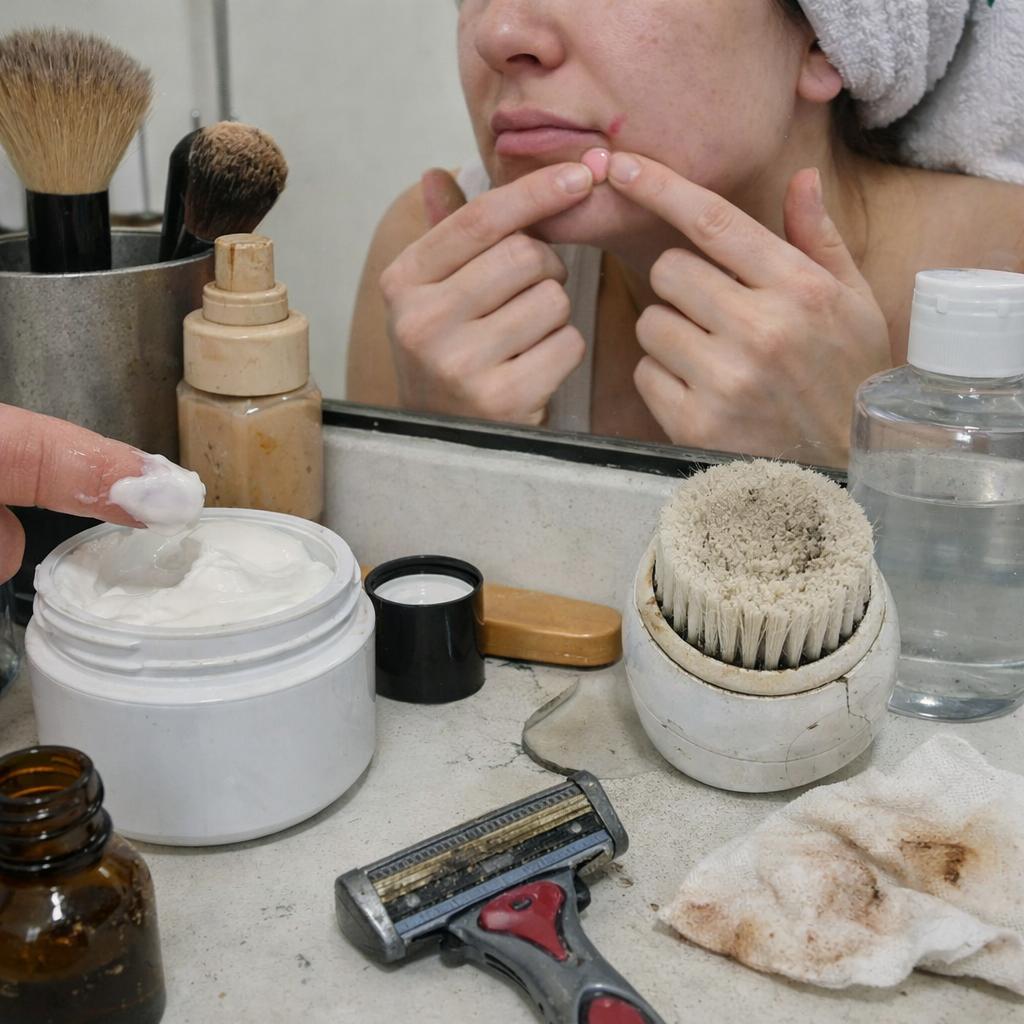
Breakouts can become harder to manage when skin is repeatedly irritated, products are changed too quickly, or spots are picked. A simpler approach is often more useful: cleanse gently, avoid scrubbing and squeezing, introduce one change at a time, follow product labels, and allow enough time to assess a routine while watching for irritation. Hair and makeup products can also matter. Persistent, painful, spreading, or scarring breakouts are reasonable reasons to seek professional advice.
These patterns are common, and they do not mean someone has caused their own skin concerns. Breakouts can be influenced by hormones, genetics, medications, stress, friction, product ingredients, and other factors. The goal is not a perfect routine. It is to reduce avoidable irritation and make it easier to understand what is helping, what is not, and when additional care may be appropriate.
Which habits can make breakouts harder to manage?
Several everyday habits can increase irritation or make a routine difficult to evaluate. No single habit explains every skin change, and not every breakout is caused by skincare. Reviewing the areas below can help identify practical adjustments without automatically adding more products.
Picking, squeezing, or repeatedly touching spots
Picking can damage the skin around a blemish and prolong visible redness or tenderness. It may also increase the chance of a lingering dark mark or scar, especially when the area is repeatedly disturbed. Deeper or painful spots are particularly difficult to squeeze safely at home.
Keep fingernails away from active spots as much as possible. A hydrocolloid patch may protect an appropriate surface-level spot from rubbing and touching; follow the product directions and avoid applying one to significantly irritated skin, an area with signs of infection, or skin that reacts to the adhesive. A clean, cool compress may feel soothing on some inflamed areas. Do not use needles, metal extraction tools, or improvised extraction methods at home.
Washing too aggressively
More washing is not automatically better. Frequent cleansing, very hot water, stiff brushes, rough cloths, and abrasive scrubs can leave skin feeling tight, stinging, or unusually dry. Those sensations are reasons to reassess the routine, not signs that the skin has been cleaned more effectively.
Use lukewarm water and clean fingertips. Choose a cleanser that suits the skin’s needs and follow its label. Many people find that cleansing in the morning and before bed is sufficient, while a gentle rinse may be more comfortable after heavy sweating. The right frequency depends on the person, climate, activity, and products being used. Avoid scrubbing in an attempt to remove every bump or flake.
Starting too many active products at once
Adding several acne-focused products together can make it difficult to identify the cause of dryness, burning, peeling, or new bumps. Products that are individually reasonable may still be irritating when layered or used too frequently. Examples include exfoliating acids, retinoid products, benzoyl peroxide, fragranced products, and strong astringents, although tolerance varies.
Make one change at a time when possible. Read each label for directions, warnings, and ingredient information. If a new product causes persistent burning, marked redness, swelling, or worsening discomfort, stop using it. Seek advice from a qualified healthcare professional if symptoms are severe or do not settle. Do not assume that increasing the amount or frequency will produce faster improvement.
Changing products before there is enough information
A cleanser or moisturizer may be assessed fairly quickly for comfort and compatibility, but products intended to affect breakouts often require more time. The appropriate evaluation period depends on the ingredient, concern, frequency of use, and whether irritation limits use. Rapidly switching products can create a cycle in which no option is used consistently enough to evaluate.
Consider keeping a simple record of product names, start dates, frequency, and notable reactions. Change one variable at a time when practical. There is no need to track every detail; the purpose is to reduce guesswork. If a product is clearly irritating, do not continue using it merely to reach an arbitrary time point.
Using a routine inconsistently
Inconsistent use can make results difficult to interpret. At the same time, consistency does not mean pushing through significant irritation. A routine that is gentle enough to follow is often more practical than an ambitious routine used only sporadically.
Choose a small number of basics that you can use reliably. Follow current product directions rather than copying someone else’s schedule. Some over-the-counter acne products are intended for gradual introduction, but instructions can differ by formulation and strength. A pharmacist or clinician can help explain how to use a product when the label is unclear or other treatments are involved.
Can moisturizer and sunscreen be part of an acne-prone routine?
Yes. Skin that feels oily may still become dry or uncomfortable, particularly after cleansing or using an acne treatment. A moisturizer may improve comfort and reduce the temptation to compensate with harsher products. Look for wording such as “non-comedogenic” when helpful, while remembering that the term does not guarantee that a product will suit everyone.
Sunscreen may help limit the darkening of marks after inflammation. Choose a broad-spectrum product with a sun-protection factor listed on the label and apply it as directed. If a sunscreen stings, feels too heavy, or appears to coincide with a recurring pattern of bumps, try a different formulation rather than abandoning sun protection altogether. People using products that increase sun sensitivity should pay close attention to label instructions and professional guidance.
Could hair or makeup products be contributing?
Hair and cosmetic products can transfer to the forehead, temples, cheeks, jawline, neck, or areas covered by hats and headbands. Heavy, oily, fragranced, or occlusive formulas may not suit everyone. Residue can be more noticeable when hair touches the face or makeup is worn for long periods.
This does not mean every hair or makeup product is a problem. Look for a repeated contact pattern rather than making broad assumptions. If bumps regularly appear where one product touches the skin, consider pausing that product or switching to a simpler alternative. Introduce any replacement separately so the change can be evaluated. Remove makeup gently at the end of the day, clean applicators as directed, and avoid sharing cosmetics or tools.
What should be avoided when trying to speed up results?
Trying to force faster results can produce more irritation. Common examples include applying more than directed, combining several exfoliants, washing repeatedly, leaving a product on longer than the label advises, or using a treatment on unaffected areas without understanding its intended use. These approaches may make skin more uncomfortable without improving the underlying concern.
There is also a difference between treating an existing spot and reducing future breakouts. A product used on a single blemish may not address recurring areas, while a product intended for prevention may not create an immediate visible change. The appropriate use depends on the formulation, the person’s skin, and the nature of the concern. Avoid matching an ingredient to a presumed breakout category without reliable guidance; similar-looking bumps can have different causes.
Common mistakes and more measured alternatives
| Common approach | Why it can be unhelpful | More measured alternative |
|---|---|---|
| Scrubbing, using brushes, or washing very frequently | May increase dryness, stinging, and surface irritation | Use fingertips, lukewarm water, and a suitable cleanser according to its label |
| Squeezing or extracting spots at home | Can injure surrounding skin and prolong redness or marks | Protect the area from touching and ask a qualified professional about persistent or deep spots |
| Starting several active products together | Makes reactions and benefits difficult to identify | Introduce one change at a time and monitor comfort |
| Abandoning a product after a few days | May not provide enough information about its usefulness | Assess comfort early, then allow a reasonable label- or clinician-guided period when tolerated |
| Automatically skipping moisturizer or sunscreen | May increase discomfort or allow marks to darken with sun exposure | Try comfortable formulations and follow their directions |
What skincare changes can and cannot tell you
Reviewing a routine can reveal habits that increase irritation or make products difficult to assess. It cannot determine why a particular person is breaking out, identify a specific skin condition, or select an individualized treatment. Similar-looking bumps can have different causes, and a photo, product list, or online description is not enough to establish a diagnosis.
Breakouts may continue despite careful skincare. Hormonal changes, medications, shaving, friction, stress, and other health factors can contribute. If a product seems to trigger a reaction, the timing and symptoms are useful information, but they do not by themselves prove an allergy or intolerance. Keep the packaging or ingredient list available when asking a professional for help.
Who should use extra caution?
Extra caution may be appropriate for people with a history of strong skincare reactions, very sensitive or easily irritated skin, clinician-diagnosed eczema or rosacea, or conditions affecting the eyes or lips. People who are pregnant, trying to become pregnant, or breastfeeding should ask a qualified healthcare professional about acne ingredients before starting an active treatment because suitability depends on the ingredient and individual circumstances.
Children and teenagers may need age-appropriate guidance, especially when several products are being considered. Anyone taking prescription medicines or using a prescribed skin treatment should ask the prescribing professional or pharmacist before adding, removing, or changing an over-the-counter product. Do not alter prescribed care based on general skincare guidance.
Stop and seek professional advice if
- Breakouts are painful, deep, rapidly worsening, or leaving scars or persistent dark marks.
- There are widespread areas of redness, swelling, crusting, drainage, or significant tenderness.
- A product causes swelling, hives, blistering, trouble breathing, or severe discomfort. Seek urgent help for breathing problems or rapidly developing swelling.
- Skin symptoms substantially affect sleep, mood, daily activities, or confidence.
- A consistent, gentle routine has not helped enough, or the cause of the bumps remains unclear.
- You are unsure whether an ingredient is appropriate because of pregnancy, breastfeeding, age, medication use, or another health concern.
A dermatologist, primary care professional, or pharmacist can help review symptoms and products. In-person care may be especially useful when breakouts are persistent, painful, or causing marks because treatment options and timing depend on the individual.
A practical routine reset
- Review the recent pattern. Note when the concern began, where it appears, and whether it followed a new skincare product, hair product, cosmetic, medication, or routine change.
- Reduce obvious sources of irritation. Pause scrubs, brushes, repeated washing, and unnecessary product layers. Do not stop a prescribed treatment without advice; ask the prescriber how to manage irritation.
- Keep the basics manageable. Use a gentle cleansing approach, a comfortable moisturizer if needed, and daytime sun protection that suits you. Follow current labels rather than a universal schedule.
- Change one thing at a time. This creates a clearer way to notice both benefits and reactions. Reassess sooner if a product causes significant discomfort.
- Protect spots from interference. Avoid picking, squeezing, and friction. Keep hair and cosmetic tools clean according to their care instructions, and remove makeup gently.
- Set a review point. Consider whether the routine is comfortable, realistic, and showing a helpful trend over a reasonable period. If not, ask a professional rather than escalating products on your own.
Frequently asked questions
Should a cleanser leave skin feeling tight or squeaky?
Not necessarily. Tightness, stinging, or persistent dryness may indicate that the cleanser or washing method is too irritating. Try lukewarm water, fingertips, and a gentler formulation while following the product label. If discomfort continues, ask a healthcare professional for advice.
How long should an acne product be used before deciding whether it helps?
There is no single timeline for every product. Comfort and irritation can be assessed early, but changes in breakouts may take longer and depend on the ingredient and how it is used. Follow the label or clinician guidance, avoid changing several products at once, and seek advice if the problem is worsening or causing marks.
Is it always necessary to stop moisturizer if skin feels oily?
No. Oily skin can still feel dry or irritated. A lightweight moisturizer may improve comfort for some people. Choose a suitable formulation, look for non-comedogenic wording if useful, and reassess it if there is a clear reaction or recurring pattern of congestion.
Can a hydrocolloid patch replace acne treatment?
A hydrocolloid patch is better viewed as a protective covering for an appropriate surface-level spot, not a complete treatment plan. It may reduce touching and rubbing, but it will not address every cause of recurring breakouts. Follow the package directions and seek professional advice for deep, painful, or persistent lesions.
When should someone see a dermatologist or another healthcare professional?
Consider professional care for painful or deep breakouts, scarring or persistent dark marks, widespread or worsening symptoms, significant irritation, emotional distress, or uncertainty about treatment safety. A professional can assess the concern and discuss options suited to the individual.
Sources and further reading
- 9 things to try when acne won't clear — American Academy of Dermatology Association
- Acne: Tips for managing — American Academy of Dermatology Association
- How to treat different types of acne — American Academy of Dermatology Association
Safety note
This guide provides general education rather than diagnosis or individualized treatment. Read current product labels and seek qualified care for severe, persistent, painful, infected-looking, rapidly worsening, or otherwise concerning symptoms.