
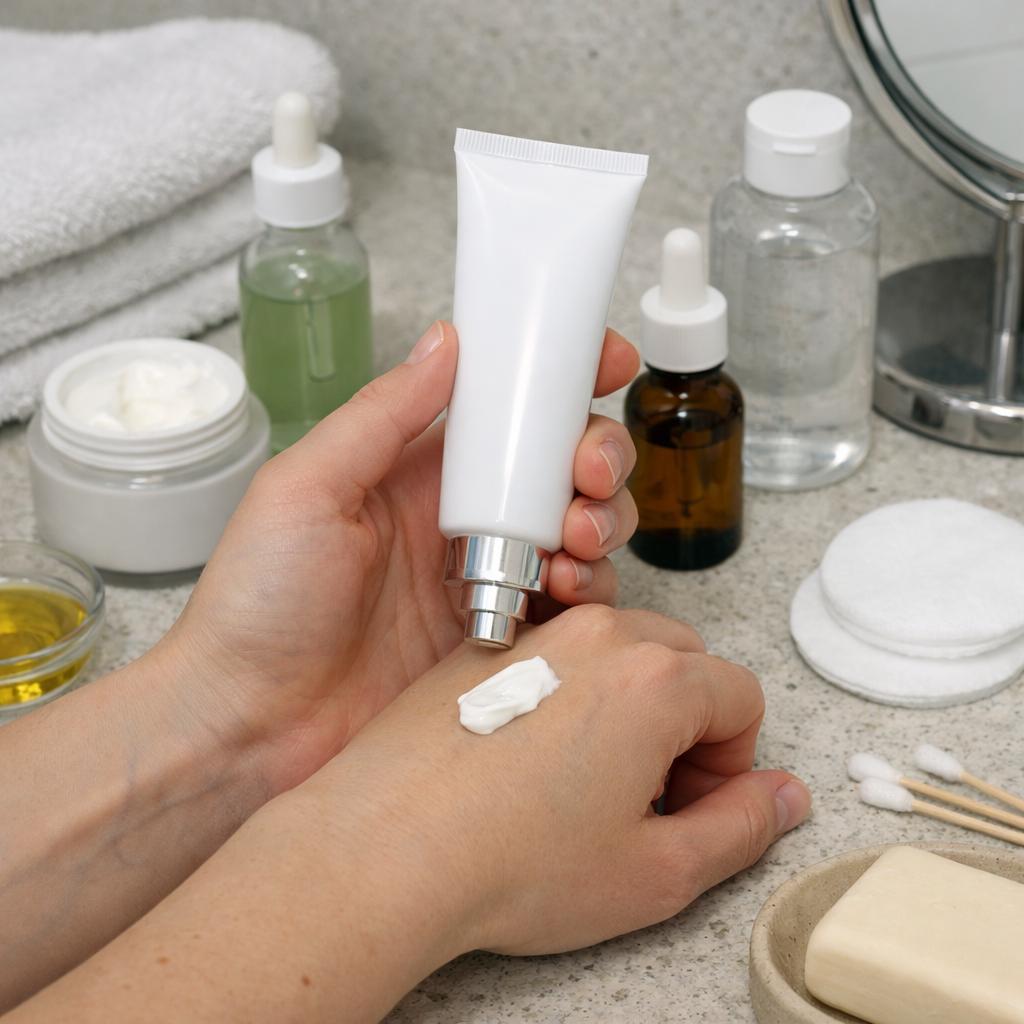
The safest way to begin retinol is to choose one clearly labeled product, apply a small amount to completely dry skin once or twice a week at first, and use moisturizer and broad-spectrum sunscreen. Increase frequency only if your skin remains comfortable. Persistent burning, swelling, cracking, or severe redness is a reason to stop and seek professional advice rather than push through.
In brief: Retinol is an over-the-counter retinoid derived from vitamin A. Over time, it may support smoother-looking texture, more even tone, and fewer visible signs of photoaging, but irritation is possible and results are gradual. More is not automatically better: strength, formulation, frequency, and your skin’s current condition all matter.
What is retinol, and how is it different from other retinoids?
Retinoid is the broad term for vitamin A derivatives used in skincare and medicine. Retinol is one type of nonprescription retinoid. The skin converts it through several steps before it becomes retinoic acid, the form that directly interacts with retinoid receptors in skin cells. These conversion steps may make retinol less potent and, for some people, more tolerable than prescription retinoids.
Nonprescription products may also contain retinyl esters, retinaldehyde (often called retinal), or another retinoid derivative. Prescription products can contain medicines such as tretinoin, tazarotene, or adapalene, depending on the country and condition being treated. A prescription retinoid is not simply a stronger cosmetic serum: it may have different approved uses, instructions, and safety considerations and should be used according to the prescriber’s directions.
Retinoids are commonly used for concerns such as fine lines, uneven tone, rough texture, and blemishes. The best choice depends on the goal, formulation, other treatments, and how readily your skin becomes irritated.
How do retinol labels and strengths differ?
Retinol labels can be difficult to compare. A product may state a percentage of retinol, identify a blend of retinoids, or use language such as “retinol complex” without disclosing the amount of pure retinol. Some labels state the concentration of a delivery system rather than retinol itself. A higher advertised percentage is therefore not always a straightforward sign of greater strength.
| Label or ingredient | What it means | Beginner consideration |
|---|---|---|
| Retinyl palmitate or another retinyl ester | A precursor requiring more conversion steps before reaching retinoic acid. | May be a gentler starting point, although performance depends on the amount and formulation. |
| Retinol | An over-the-counter retinoid that requires conversion in the skin. | Look for a clearly stated concentration, stable packaging, and directions that support gradual use. |
| Retinal or retinaldehyde | A retinoid one conversion step closer to retinoic acid than retinol. | May feel more active and be more irritating for some people. It is not automatically the best first retinoid. |
| Adapalene, tretinoin, or other prescription retinoids | Medicinal retinoids with specific labeling and prescribing requirements. | Follow the current prescription instructions and seek guidance before changing how they are used. |
Read the package: Check the ingredient list, stated percentage, expiration information, storage instructions, warnings, and directions. If the retinoid type or concentration is unclear, customer service or a pharmacist may be able to explain it. Do not assume products with similar names have equal strength.
How should a beginner introduce retinol?
There is no single schedule that suits everyone. Change one variable at a time and let your skin’s response guide the next step. Frequency is usually the first variable to adjust; moving to a stronger product is not required simply because several weeks have passed.
1. Start with a simple routine
Before adding retinol, keep cleansing and moisturizing predictable. A gentle cleanser, plain moisturizer, and sunscreen make it easier to identify whether retinol is causing discomfort. If your skin is already stinging, peeling, unusually dry, or reacting to several products, wait until it is comfortable before introducing another active ingredient.
2. Use a small amount
Follow the product label. For many facial products, a thin, pea-sized amount is intended for the entire face—not a separate amount for each area. Using more does not necessarily produce faster results and can increase irritation. Avoid the eyelids, lips, and creases around the nose unless the label or a qualified clinician advises otherwise; these areas often feel more sensitive.
3. Begin with occasional use
One or two nonconsecutive evenings per week is a practical starting framework for many beginners, though the label should take priority. If your skin remains comfortable, cautiously add another evening after allowing enough time to notice delayed dryness or redness. Some people stay at a low frequency because that is what they tolerate well; nightly use is not a universal goal.
If irritation develops, do not increase frequency. Return to the last comfortable schedule, take a break, or stop the product depending on the symptoms.
4. Apply to dry skin unless directed otherwise
After cleansing, let your skin dry before applying retinol. Damp skin may increase penetration and make irritation more likely for some users. If direct application feels uncomfortable, moisturizer may be applied first. This buffering method can improve comfort, although it cannot guarantee that irritation will be prevented.
5. Keep the evening routine calm
Avoid introducing several potentially irritating products alongside a new retinol. Exfoliating acids, abrasive scrubs, other retinoids, high-strength vitamin C products, and acne treatments such as benzoyl peroxide may be useful in some routines, but combining or alternating them requires care. A simple routine makes cause and effect easier to assess.
A gradual retinol plan
- Choose one clearly labeled product and follow its directions.
- Apply a small amount to dry skin once or twice a week at first.
- Observe your skin between applications, not only immediately afterward.
- Keep the same frequency while your skin is comfortable.
- Increase by one evening only after your skin has remained comfortable.
- Reduce frequency or pause if dryness, stinging, redness, or peeling becomes troublesome.
- Seek professional guidance before switching to a prescription retinoid or adding another strong active.
Can moisturizer reduce retinol irritation?
Moisturizer can ease the dry, tight feeling that some people experience with retinoids. Applying it before retinol, after retinol, or both is sometimes called the moisturizer sandwich method. A moisturizer containing glycerin, dimethicone, ceramides, or other emollients may support comfort, but no ingredient guarantees that irritation will be prevented.
| Application method | Basic order | When it may help |
|---|---|---|
| Direct application | Cleanse, let skin dry, apply retinol, then moisturize. | For skin that tolerates the product comfortably. |
| Buffered application | Cleanse, let skin dry, apply moisturizer, then retinol. | When direct application feels too drying or uncomfortable. |
| Moisturizer sandwich | Apply moisturizer, retinol, then another layer of moisturizer. | For additional support against dryness and tightness. |
Do not use moisturizer as a way to force your skin to tolerate significant burning, swelling, or worsening redness. Avoid applying retinol to visibly irritated or broken skin unless a clinician has specifically instructed you to do so.
What should you expect during the first few weeks?
Some people notice dryness, mild flaking, tightness, or temporary redness after starting a retinoid; others do not. These effects are not proof that the product is working, and discomfort should not be treated as a test of effectiveness. Persistent, worsening, painful, or disruptive symptoms mean the routine needs reassessment.
Some users report an early increase in blemishes, often called purging. However, not every breakout after a new product is purging. Irritation, sensitivity to another ingredient, or an unrelated concern can look similar. Deep, painful, widespread, or persistent breakouts deserve professional evaluation rather than repeated increases in retinol use.
Visible changes usually take time. Texture and tone may change gradually over several months, and results vary. A product used consistently at a tolerable frequency is often more practical than a stronger product that repeatedly causes irritation.
How should sunscreen fit into a retinol routine?
Use broad-spectrum sunscreen according to its label and reapply as directed. Retinoids can make skin more prone to irritation from sunlight, particularly while it is adjusting. Sunscreen also helps limit ongoing ultraviolet exposure, which contributes to uneven tone and visible photoaging.
Sunscreen cannot compensate for excessive retinol use or severe irritation. Add shade, protective clothing, and a hat when appropriate, especially during prolonged outdoor exposure.
Which products should not be introduced at the same time?
When retinol is new, avoid introducing other strong actives simultaneously. Potentially irritating categories include exfoliating acids, scrubs, high-strength vitamin C products, other retinoids, and some acne medications. This does not mean they can never be part of the same overall routine; timing, formulation, and individual tolerance matter.
- Establish a comfortable retinol schedule before adding another active.
- Introduce only one new product at a time.
- Follow each product’s label rather than creating a more aggressive schedule.
- Consider using compatible actives at a different time of day or on different evenings.
- Ask a pharmacist or qualified clinician about combinations involving prescriptions or a diagnosed skin condition.
Who should be cautious?
Speak with a qualified healthcare professional before using a retinoid if you are pregnant, trying to conceive, or breastfeeding. Topical retinoids are generally avoided during pregnancy. Guidance during breastfeeding can depend on the specific product, where it is applied, and the clinician’s assessment.
Professional guidance is also especially valuable if you have rosacea, eczema, psoriasis, a history of contact reactions, significant sensitivity, or another diagnosed skin condition. If you use prescription acne medicines, steroid creams, other topical treatments, or medication that affects the skin, ask the prescriber or pharmacist about compatibility before adding an over-the-counter retinoid.
Stop retinol and seek professional advice if
- You develop intense or persistent burning, swelling, severe redness, extensive cracking, blistering, or oozing.
- Symptoms continue or worsen after reducing frequency or pausing the product.
- Breakouts become deep, painful, widespread, or unusually persistent.
- You are unsure whether a reaction comes from retinol, another product, or a prescription treatment.
- You want to move from an over-the-counter product to a prescription retinoid.
- You are pregnant, trying to conceive, breastfeeding, or planning pregnancy and have questions about retinoid exposure.
- You experience eye swelling, trouble breathing, or other urgent symptoms; seek immediate medical care.
A practical way to decide
Before buying or applying retinol, ask four questions:
What is the goal?
Fine lines, uneven tone, texture, and blemishes may call for different approaches. A retinoid is not the only option for every concern.
What does the label say?
Identify the retinoid type, stated concentration, directions, warnings, storage requirements, and expiration information. Do not directly compare percentages referring to different ingredients or blends.
Is the routine stable?
A simple routine makes irritation easier to identify. Delay retinol if your current products are already causing stinging, peeling, or unusual dryness.
What is the irritation plan?
Plan to reduce frequency or pause instead of pushing through worsening symptoms. Seek professional advice when a reaction is severe or persistent.
If the answers are unclear, a pharmacist, primary-care clinician, or dermatologist may be more helpful than choosing a stronger product. Professional input is particularly appropriate when the goal involves a medical skin condition or prescription treatments are already part of the routine.
Retinol beginner FAQs
Should retinol be used every night?
Not necessarily. Some people eventually tolerate frequent use, while others do better with occasional application. Increase only while your skin remains comfortable, and follow the product label or professional instructions.
Is a 1% retinol product a good starting point?
A high-percentage product may be too irritating for some beginners, and percentages are not always directly comparable across formulations. A clearly labeled, lower-strength product introduced gradually may be a more practical starting point.
Can moisturizer be applied before retinol?
Often, yes, if the label does not say otherwise. Moisturizer before or after retinol may improve comfort. Apply retinol to dry skin in a small amount, and do not rely on moisturizer to push through significant burning or swelling.
Does peeling mean retinol is working?
No. Peeling can be an irritation response and is not a reliable measure of effectiveness. If it becomes troublesome, reduce frequency or pause and simplify the routine.
Can retinol be used around the eyes?
The eyelids and nearby creases can be especially sensitive. Avoid these areas unless the product is specifically labeled for them or a qualified clinician has advised you otherwise.
Can retinol be used during pregnancy?
Topical retinoids are generally avoided during pregnancy. If you are pregnant, trying to conceive, breastfeeding, or unsure about a product, consult a qualified healthcare professional before use.
Retinoids are long-term skincare tools, not products that need to be rushed. A clearly labeled formula, gradual introduction, adequate moisturizer, daily sun protection, and attention to irritation can make starting retinol more manageable. Comfort and consistency are more useful guideposts than chasing the strongest product or the most frequent schedule.
Sources and further reading
These resources provide additional medical and skincare context:
- Retinoid or retinol? — American Academy of Dermatology Association
- Skin care in your 20s — American Academy of Dermatology Association
- Anti-aging skin care — American Academy of Dermatology Association
Safety note
This guide provides general education, not diagnosis or individualized treatment. Follow the current label or prescription instructions and seek qualified care for severe, persistent, painful, infected, rapidly changing, or otherwise concerning symptoms.