What if your morning skincare routine is the reason your sensitive skin feels irritated by noon?
For sensitive skin, “more” is rarely better. The right morning routine should calm, protect, and strengthen your skin barrier without triggering redness, stinging, or tightness.
A simple approach-gentle cleanse, targeted hydration, and reliable sunscreen-can make your skin feel more comfortable before the day even begins.
In this guide, you’ll learn how to build a simple morning skincare routine for sensitive skin using minimal steps, low-risk ingredients, and smart application habits.
Why Sensitive Skin Needs a Minimal Morning Skincare Routine
Sensitive skin reacts quickly to friction, fragrance, harsh cleansers, and too many active ingredients. A minimal morning skincare routine lowers the chance of redness, burning, clogged pores, and barrier damage while still covering the essentials: gentle cleansing, hydration, and daily sun protection.
In real life, I often see irritation start when someone layers a vitamin C serum, exfoliating toner, retinol alternative, moisturizer, and sunscreen before work. If the skin barrier is already stressed, even “clean beauty” or expensive dermatologist-recommended skincare products can sting. Simple is usually safer.
A practical morning routine for sensitive skin should focus on products with clear benefits and low irritation risk:
- Gentle cleanser or just lukewarm water if your skin feels dry in the morning.
- Fragrance-free moisturizer with ceramides, glycerin, or hyaluronic acid for barrier support.
- Mineral sunscreen SPF 30+ with zinc oxide or titanium dioxide, especially if chemical sunscreens cause burning.
Before buying new skincare, check ingredient lists on INCIDecoder to spot common irritants like fragrance, essential oils, drying alcohols, or strong acids. This small step can save money on products that look promising but may not suit reactive skin.
A minimal routine also makes it easier to identify what is helping and what is causing flare-ups. If your face suddenly feels hot or tight, you are only reviewing two or three products instead of a full shelf, which is useful before booking a dermatologist consultation or allergy patch testing.
How to Layer Cleanser, Moisturizer, and Mineral Sunscreen Without Irritation
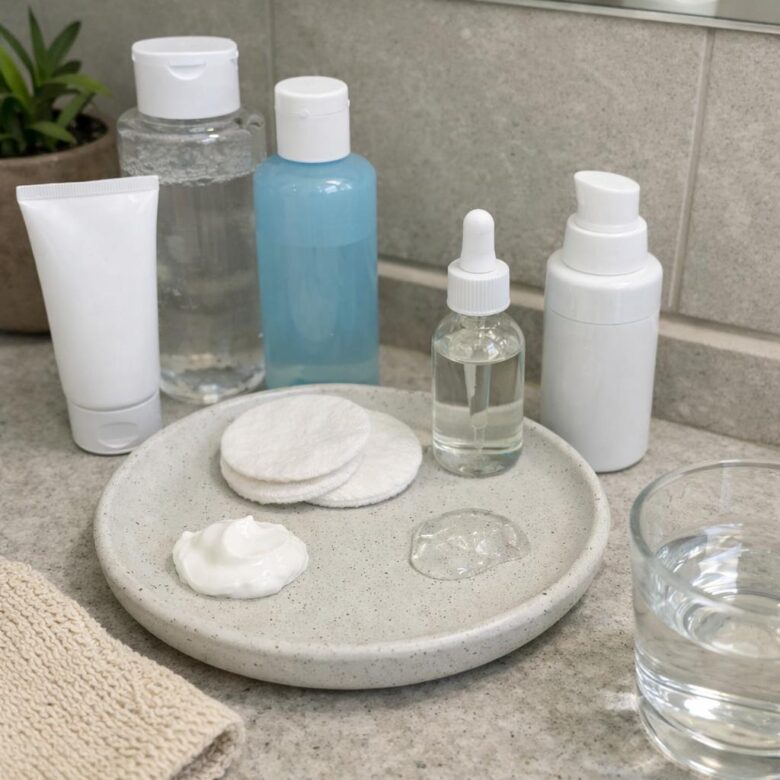
For sensitive skin, the safest morning skincare routine is less about using more products and more about giving each layer time to settle. Start with a gentle, fragrance-free cleanser or simply rinse with lukewarm water if your skin feels dry or tight in the morning. Hot water and foaming sulfates can weaken the skin barrier before you even apply moisturizer.
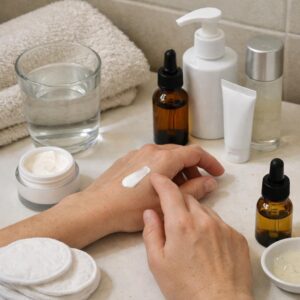
After cleansing, pat your face until it is slightly damp, then apply a barrier repair moisturizer with ingredients like ceramides, glycerin, or squalane. A pea-to-nickel-sized amount is usually enough for the face; using too much can make mineral sunscreen pill or look patchy. In real use, I often see irritation improve when people stop rubbing moisturizer in aggressively and instead press it over redness-prone areas.
- Cleanser: Use a low-pH, non-comedogenic formula and rinse well.
- Moisturizer: Wait 1-2 minutes until it feels absorbed, not slippery.
- Mineral sunscreen: Apply zinc oxide or titanium dioxide SPF 30+ in thin layers.
Mineral sunscreen works best when applied as the final step, not mixed into moisturizer. Use two light passes instead of one thick coat, especially around the nose, cheeks, and under the eyes where sensitive skin often stings. If you wear makeup, let the sunscreen set for a few minutes before applying foundation.
When choosing products, check ingredient lists with tools like INCIDecoder or SkinSAFE to flag fragrance, drying alcohol, or common allergy triggers. This is especially helpful if you are comparing dermatologist-recommended sunscreen, tinted mineral SPF, or higher-cost sensitive skin products before buying.
Common Morning Skincare Mistakes That Trigger Redness, Stinging, or Breakouts
One of the biggest mistakes is cleansing too aggressively in the morning. If your skin already feels tight or hot when you wake up, using a foaming cleanser, cleansing brush, or exfoliating face wash can strip the barrier and make sunscreen sting. A gentle rinse or a low-pH, fragrance-free cleanser is often enough.
Another common issue is layering too many “active” products before leaving the house. Vitamin C, acne treatment gels, exfoliating toners, and retinoids can be helpful, but combining them in a sensitive skin routine may cause redness, peeling, or clogged pores. For example, I often see irritation happen when someone applies benzoyl peroxide, then a brightening serum, then matte sunscreen-all before 8 a.m.
- Skipping moisturizer: Even oily sensitive skin needs barrier support before sunscreen.
- Using fragranced SPF: Perfume and essential oils are frequent triggers for stinging around the cheeks and eyes.
- Changing products too fast: Introduce one new cleanser, serum, or sunscreen at a time.
A practical tip is to check ingredient lists with INCI Decoder before buying expensive skincare products or dermatologist-recommended sunscreen. Look for possible irritants like alcohol denat., strong fragrance blends, or multiple exfoliating acids. If your skin burns with almost every product, it may be worth booking a dermatologist consultation or teledermatology service instead of spending more on trial-and-error skincare.
Summary of Recommendations
A sensitive-skin routine works best when it feels calm, predictable, and easy to repeat. Instead of chasing every new product, choose a few gentle formulas that support your skin barrier and reduce the chance of irritation.
- Start simple: cleanser, moisturizer, and sunscreen are enough for most mornings.
- Choose carefully: fragrance-free, soothing, and non-stripping products are usually safer picks.
- Adjust slowly: introduce one new product at a time and watch how your skin responds.
The right routine is not the most complicated one-it is the one your skin can tolerate consistently.