Is your moisturizer quietly making your dry, sensitive skin worse?
When your skin barrier is stressed, the wrong formula can trigger stinging, tightness, redness, and flaky patches-even if the label says “gentle.”
The best moisturizer ingredients for dry and sensitive skin do more than add temporary softness: they help restore lipids, bind water, calm irritation, and protect against moisture loss.
In this guide, you’ll learn which ingredients are truly worth looking for-and which common additives may be better left on the shelf.
What Dry, Sensitive Skin Needs From a Moisturizer: Barrier Repair, Hydration, and Irritation Control
Dry, sensitive skin usually needs more than a “rich cream.” It needs a moisturizer that supports the skin barrier, pulls in water, and reduces the chance of stinging, redness, or flare-ups. In real life, this matters most after hot showers, winter weather, retinoid use, or over-cleansing, when skin feels tight but still reacts to heavy or fragranced products.
The best moisturizer ingredients for dry and sensitive skin usually work in three layers:
- Barrier repair: Ceramides, cholesterol, fatty acids, squalane, and petrolatum help reinforce the lipid barrier and reduce water loss.
- Hydration: Glycerin, hyaluronic acid, panthenol, and urea attract moisture so skin feels less tight and rough.
- Irritation control: Colloidal oatmeal, allantoin, niacinamide, and madecassoside can help calm visible redness and discomfort.
A practical example: someone using a prescription acne treatment may find that a lightweight gel moisturizer burns, while a fragrance-free cream with ceramides and glycerin feels comfortable and reduces peeling. This does not mean expensive skincare is always better; it means the ingredient mix and formula texture matter more than marketing claims.
Before buying, check the ingredient list with a tool like INCIDecoder or look for dermatologist-tested, fragrance-free, non-comedogenic labels if you are acne-prone. For very reactive skin, patch test near the jawline for a few nights before applying it all over your face. Small step, big difference.
How to Choose the Best Moisturizer Ingredients: Humectants, Emollients, Occlusives, and Soothing Actives
The best moisturizer for dry and sensitive skin usually combines four ingredient types, not just one “hero” ingredient. Humectants like glycerin, hyaluronic acid, urea, and panthenol pull water into the skin, but they work best when paired with emollients and occlusives that help seal it in.
For daily facial skincare, look for a barrier repair cream with ceramides, cholesterol, squalane, shea butter, or fatty acids. In real use, I’ve seen lightweight hyaluronic acid gels feel good at first but leave very dry skin tight again within an hour if there is no cream layered over them.
- Humectants: glycerin, hyaluronic acid, aloe, urea, panthenol for hydration.
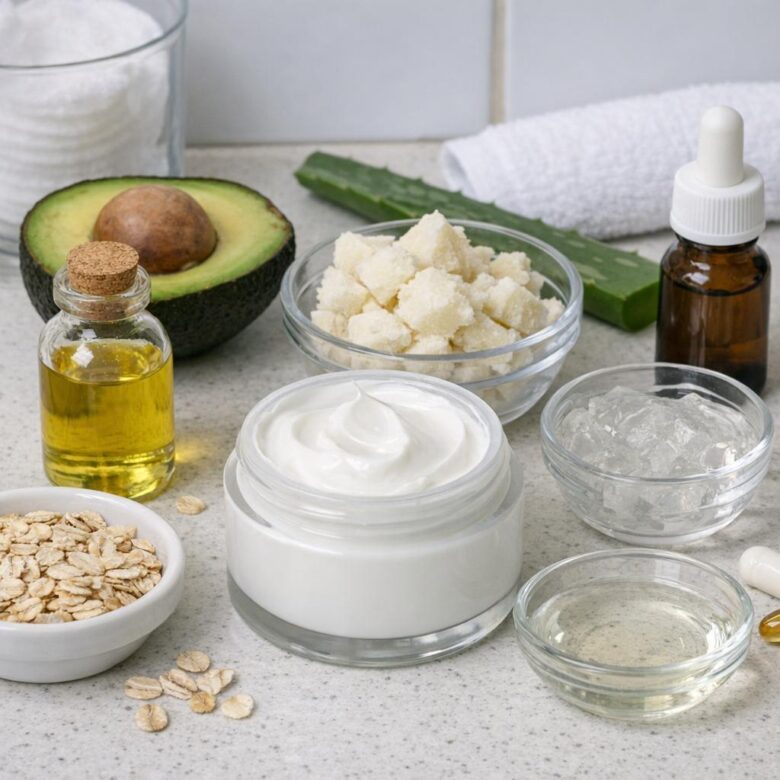
- Emollients: ceramides, squalane, jojoba oil, shea butter to smooth rough texture.
- Occlusives: petrolatum, dimethicone, mineral oil to reduce moisture loss.
If your skin stings easily, prioritize fragrance-free, alcohol-free, and essential oil-free formulas. Soothing actives such as colloidal oatmeal, allantoin, madecassoside, niacinamide, and beta-glucan can be especially useful in an eczema-prone or post-treatment skincare routine.
A practical way to shop is to copy the ingredient list into INCI Decoder before buying, then check whether the formula includes both water-binding and barrier-supporting ingredients. For example, a ceramide moisturizer with glycerin and dimethicone is often a smarter purchase than an expensive face cream built mostly around botanical extracts.
For nighttime or winter use, choose a richer occlusive cream; for daytime under sunscreen, pick a non-comedogenic lotion with glycerin, ceramides, and dimethicone. Simple usually wins.
Moisturizer Ingredients to Avoid and Layering Mistakes That Can Worsen Sensitive Skin
For dry, sensitive skin, the wrong “rich” moisturizer can make burning, itching, or redness worse. Be cautious with fragrance, essential oils, denatured alcohol, menthol, eucalyptus, citrus extracts, and strong exfoliating acids like glycolic acid or high-strength lactic acid, especially if your skin barrier already feels tight or cracked.
Preservatives are not automatically bad, but some people react to ingredients such as methylisothiazolinone or formaldehyde-releasing preservatives. If you have eczema-prone skin or frequent flare-ups, checking labels with a tool like INCIDecoder or SkinSAFE can help you compare hypoallergenic moisturizer options before spending money on another product that may not suit you.
- Avoid layering actives under heavy creams: retinoids, exfoliating acids, and vitamin C can sting more when sealed in with an occlusive balm.
- Do not apply moisturizer over irritated skin after scrubbing: physical exfoliation can create micro-tears and make even a gentle ceramide cream feel painful.
- Skip mixing products in your palm: combining prescription creams, acne treatments, and moisturizers can dilute treatment strength or increase irritation.
A real-world example: someone using a benzoyl peroxide acne gel, then a fragranced night cream, may blame the acne treatment for peeling when the fragrance and layering order are actually the bigger issue. A safer routine is cleanser, prescribed treatment if needed, then a bland barrier repair moisturizer once the skin is dry.
When in doubt, patch test behind the ear or along the jaw for a few nights. It is a small step, but it can save the cost of a dermatologist visit or another unused sensitive skin care product.
Key Takeaways & Next Steps
Choosing the right moisturizer for dry and sensitive skin is less about chasing trends and more about supporting the skin barrier consistently. Look for formulas that combine humectants, emollients, and barrier-repair ingredients, while avoiding unnecessary fragrance, harsh exfoliants, or drying alcohols.
- For tight, flaky skin: prioritize ceramides, glycerin, hyaluronic acid, and petrolatum.
- For redness or reactivity: choose simple, fragrance-free formulas with soothing ingredients.
- Best rule: patch test first, introduce one product at a time, and stay consistent.