What if your “acne-fighting” routine is actually keeping your breakouts alive?
Many common skincare habits-scrubbing harder, layering too many actives, skipping moisturizer, or spot-treating aggressively-can weaken the skin barrier and trigger even more inflammation.
Breakouts are not always a sign that your products are too gentle; sometimes they’re a warning that your routine is too harsh, too inconsistent, or simply wrong for your skin type.
In this guide, we’ll break down the skincare mistakes that can make acne worse-and what to do instead for calmer, clearer, healthier-looking skin.
Why Breakouts Get Worse: How Over-Cleansing, Harsh Actives, and Barrier Damage Trigger Acne
Many acne routines fail because they attack the skin too aggressively. Washing your face three or four times a day, using a gritty scrub, then layering salicylic acid, benzoyl peroxide, and a retinoid can strip the skin barrier and trigger more oiliness, redness, stinging, and clogged pores.
In real life, this often looks like someone buying a full “acne treatment kit,” using every product nightly, and wondering why their forehead bumps turn into inflamed breakouts within a week. The issue is not always the active ingredient itself; it is the dose, frequency, and lack of barrier repair.
- Over-cleansing: removes protective lipids, making skin feel tight and produce more surface oil.
- Harsh actives: too much exfoliation can cause irritation that mimics or worsens acne.
- Barrier damage: allows more inflammation, burning, flaking, and sensitivity to acne medication.
A smarter approach is to simplify: use a gentle cleanser, one acne active at a time, a non-comedogenic moisturizer, and daily sunscreen. If you use a prescription retinoid or dermatologist acne treatment, apply it two or three nights weekly at first, then increase only if your skin stays comfortable.
Tools like Curology or an online dermatology consultation can help identify whether you need benzoyl peroxide, azelaic acid, a prescription retinoid, or a barrier repair routine instead of more exfoliation. The best acne skincare routine is not the strongest one; it is the one your skin can tolerate consistently.
How to Build an Acne-Safe Skincare Routine Without Clogging Pores or Irritating Skin
An acne-safe skincare routine should be simple, consistent, and built around products labeled non-comedogenic, fragrance-free, and suitable for sensitive skin. In real life, many breakouts get worse because people layer too many “acne treatment” products at once-salicylic acid cleanser, benzoyl peroxide gel, retinol serum, and exfoliating toner all in the same week.
Start with three basics: a gentle cleanser, a lightweight moisturizer, and broad-spectrum sunscreen. If your skin feels tight after washing, your cleanser may be stripping your barrier, which can lead to more oiliness and irritation. A gel-cream moisturizer with ceramides or niacinamide can support the skin barrier without feeling greasy.
- Morning: gentle cleanser, non-comedogenic moisturizer, SPF 30+ sunscreen.
- Night: cleanser, acne treatment, moisturizer.
- Weekly: introduce only one new active ingredient at a time.
For example, if you want to try adapalene for clogged pores, use it two or three nights a week at first, then increase slowly if your skin tolerates it. Pairing it with a rich facial oil or heavy balm may feel soothing, but it can trap sweat and dead skin in acne-prone areas.
Before buying expensive skincare products, check ingredient lists with INCI Decoder or ask a board-certified dermatologist, especially if you have painful cystic acne, post-acne marks, or recurring hormonal breakouts. A targeted routine may cost less than constantly switching products, and it usually gives your skin a better chance to calm down.
Common Skincare Mistakes to Avoid When Treating Pimples, Blackheads, and Inflamed Acne
One of the biggest mistakes is treating every breakout the same way. Blackheads often respond well to salicylic acid, while red, inflamed acne may need benzoyl peroxide or a prescription acne treatment from a dermatologist. Using too many active ingredients at once can damage the skin barrier and make breakouts look angrier.
A common real-world example: someone uses a scrub, a strong acne cleanser, retinol, and a drying spot treatment in the same night, then wonders why their skin burns the next morning. That irritation can trigger more oiliness, peeling, and clogged pores. Simple routines usually work better.
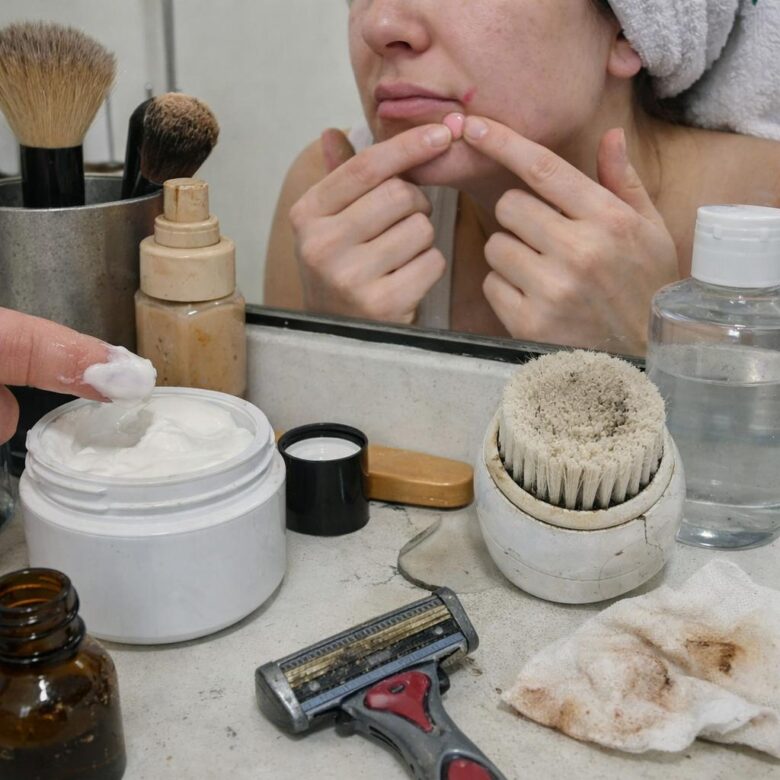
- Avoid picking pimples, especially deep cystic acne, because it raises the risk of acne scars and post-inflammatory dark spots.
- Do not skip moisturizer; choose a non-comedogenic moisturizer to support barrier repair without clogging pores.
- Do not apply acne treatments only when skin is “bad”; consistency matters more than aggressive one-night fixes.
Another overlooked mistake is copying routines from social media without checking whether the product suits your skin type. Tools like INCI Decoder can help you review ingredients before buying an expensive acne serum, facial cleanser, or LED therapy device. If painful pimples keep returning, a professional dermatology consultation may save money compared with repeatedly buying products that are not targeted to your acne type.
Expert Verdict on Common Skincare Mistakes That Can Make Breakouts Worse
Clearer skin usually comes from consistency, restraint, and choosing products that match your skin’s actual needs-not from doing more. If breakouts keep getting worse, simplify your routine, avoid harsh or pore-clogging formulas, and give each change enough time to work before adding something new.
The smartest next step is to treat persistent acne as a skin health issue, not a trial-and-error project. When breakouts are painful, spreading, leaving marks, or not improving after several weeks, seek guidance from a dermatologist to prevent long-term irritation and scarring.