What if the “best” sunscreen is actually the wrong one for your skin?
Mineral and chemical sunscreens protect you in different ways, and that difference can matter if you’re acne-prone, sensitive, oily, dry, or dealing with melasma, rosacea, or post-inflammatory dark spots.
Mineral formulas sit on the skin using zinc oxide or titanium dioxide, while chemical filters absorb UV rays before they damage your skin. Both can work beautifully-but comfort, finish, irritation risk, and skin tone compatibility often decide which one you’ll actually wear every day.
In this guide, we’ll break down mineral vs chemical sunscreen by skin type, texture, safety, white cast, breakouts, and real-world wear-so you can choose protection that fits your skin, not just the label.
Mineral vs Chemical Sunscreen: How Each Formula Protects Your Skin
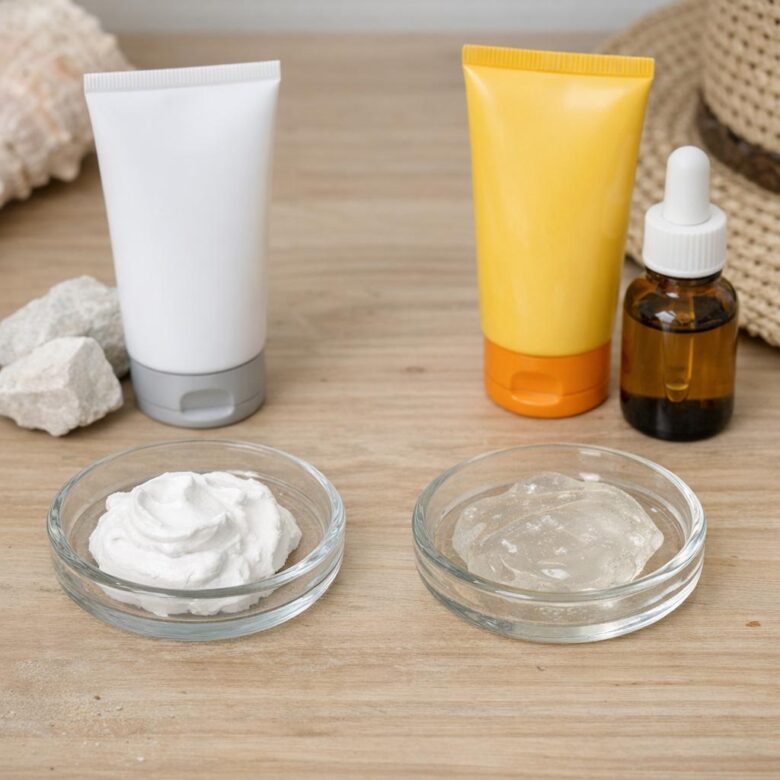
Mineral sunscreen, often called physical sunscreen, uses zinc oxide and/or titanium dioxide to sit on the skin’s surface and help block broad-spectrum UV rays. Modern formulas also absorb some UV energy, but the main benefit is that they are less likely to sting, making them a strong choice for sensitive skin, rosacea, post-procedure care, and children.
Chemical sunscreen works differently. Ingredients like avobenzone, octocrylene, homosalate, and octisalate absorb UV radiation and convert it into heat, which is then released from the skin; this is why many chemical formulas feel lighter, blend faster, and work well under makeup or daily anti-aging skincare.
- Mineral sunscreen: better for sensitive, acne-prone, or reactive skin; may leave a white cast unless tinted.
- Chemical sunscreen: often better for deeper skin tones, sports, and cosmetic wear; may irritate eyes or compromised skin.
- Both: need broad-spectrum SPF 30 or higher and reapplication every two hours outdoors.
A real-world example: if you commute, wear foundation, and check the UV index on UVLens, a lightweight chemical SPF may be easier to use every morning. But after a laser treatment or during a rosacea flare, many dermatologists recommend switching to a zinc oxide mineral sunscreen because it tends to be calmer on the skin barrier.
The best sunscreen is not just about ingredients; it is about compliance. If the texture, cost, finish, and eye comfort make you use it daily, that formula will usually deliver the better long-term skin protection benefits.
How to Choose Sunscreen for Oily, Dry, Sensitive, Acne-Prone, or Darker Skin
The best sunscreen is not just “mineral” or “chemical”; it is the one that matches your skin type, climate, and daily routine. Check the label for broad-spectrum SPF 30 or higher, then look at texture, finish, and ingredients before you compare sunscreen cost or brand claims.
- Oily or acne-prone skin: choose oil-free, non-comedogenic gel, fluid, or matte formulas. Lightweight chemical sunscreens often sit better under makeup, while zinc oxide mineral sunscreen can help if your skin gets irritated easily.
- Dry or mature skin: look for hydrating ingredients like hyaluronic acid, glycerin, ceramides, or squalane. Cream-based SPF can replace a morning moisturizer if it feels rich enough.
- Sensitive or rosacea-prone skin: mineral sunscreen with zinc oxide is usually the safer first try, especially if chemical filters sting around the eyes.
For darker skin tones, the main issue is white cast. Tinted mineral sunscreen with iron oxides can blend better and may offer extra visible-light protection, which is helpful for hyperpigmentation and melasma. A real-world tip: test sunscreen along the jawline in daylight, not just under bathroom lighting, because many “invisible” formulas still look gray outside.
If you are unsure about ingredients, use INCI Decoder to check potential irritants, fragrance, drying alcohols, and comedogenic oils before buying. For daily commuting, a comfortable SPF lotion may be enough; for beach days, workouts, or outdoor jobs, choose water-resistant sunscreen and reapply with a stick, spray, or powder sunscreen for easier coverage.
Common Sunscreen Mistakes That Reduce Protection and Irritate Skin
One of the biggest sunscreen mistakes is using too little product. For the face and neck, most adults need about two finger-lengths, not a pea-sized amount, especially with broad-spectrum SPF 30 or SPF 50 sunscreen. I often see people buy a premium dermatologist-recommended sunscreen, then apply it so thinly that the real protection drops dramatically.
Another common issue is layering products in the wrong order. Sunscreen should usually be the last step in your morning skincare routine, after moisturizer and before makeup. If you mix mineral or chemical sunscreen directly into foundation, serum, or face oil, you can disturb the protective film and increase the chance of uneven UV coverage.
- Skipping reapplication: Reapply every two hours outdoors, and sooner after sweating, swimming, or towel drying.
- Ignoring the UV Index: Check apps like UVLens before long commutes, beach days, or outdoor workouts.
- Using the wrong formula: Fragrance-heavy chemical sunscreen may sting sensitive skin, while thick mineral sunscreen can feel drying if your barrier is already compromised.
A real-world example: someone with acne-prone skin may choose a rich, waterproof body sunscreen for the face because it seems cost-effective, then wonder why breakouts and irritation get worse. In that case, switching to a non-comedogenic facial sunscreen, preferably oil-free and labeled for sensitive skin, can make daily use much easier.
Also, do not rely on sunscreen alone if you are dealing with melasma, rosacea, post-acne marks, or anti-aging concerns. Hats, sunglasses, UPF clothing, and shade add meaningful protection and can reduce how much irritation your skin experiences from repeated sunscreen application.
Summary of Recommendations
The best sunscreen is the one your skin tolerates well and you’ll use every day. Choose mineral sunscreen if your skin is sensitive, reactive, acne-prone, or if you prefer a gentler, low-irritation option. Choose chemical sunscreen if you want a lighter texture, invisible finish, and easier blending under makeup.
- Dry skin: look for hydrating formulas.
- Oily or acne-prone skin: choose non-comedogenic, lightweight options.
- Sensitive skin: start with zinc oxide or titanium dioxide.
Whichever type you choose, prioritize broad-spectrum SPF 30 or higher and reapply consistently.