What if your “acne-fighting” skincare routine is actually keeping your breakouts alive?
For acne-prone skin, the wrong cleanser, moisturizer, or serum can trigger clogged pores, irritation, excess oil, and a cycle of flare-ups that feels impossible to break.
Choosing the right products is less about chasing viral ingredients and more about understanding labels, textures, actives, and what your skin barrier can tolerate.
This guide will help you spot acne-safe formulas, avoid common breakout triggers, and build a routine that treats blemishes without stripping or stressing your skin.
What Makes Skin Acne-Prone: Ingredients, Triggers, and Barrier Health
Acne-prone skin is not just “oily skin.” Breakouts often happen when excess sebum, dead skin cells, bacteria, and inflammation meet a weakened skin barrier. That is why a pricey acne treatment can fail if your cleanser is stripping, your moisturizer is too heavy, or your routine includes hidden pore-clogging ingredients.
When checking product labels, look beyond the front claims like “clean” or “dermatologist-tested.” Ingredients such as isopropyl myristate, coconut oil, cocoa butter, and some heavy waxes may trigger congestion in certain people, especially under sunscreen or makeup. A practical tool like INCIdecoder can help you review ingredient lists before buying a non-comedogenic moisturizer, salicylic acid cleanser, or oil-free sunscreen.
- Common triggers: heavy occlusive oils, fragranced formulas, harsh scrubs, and alcohol-heavy toners.
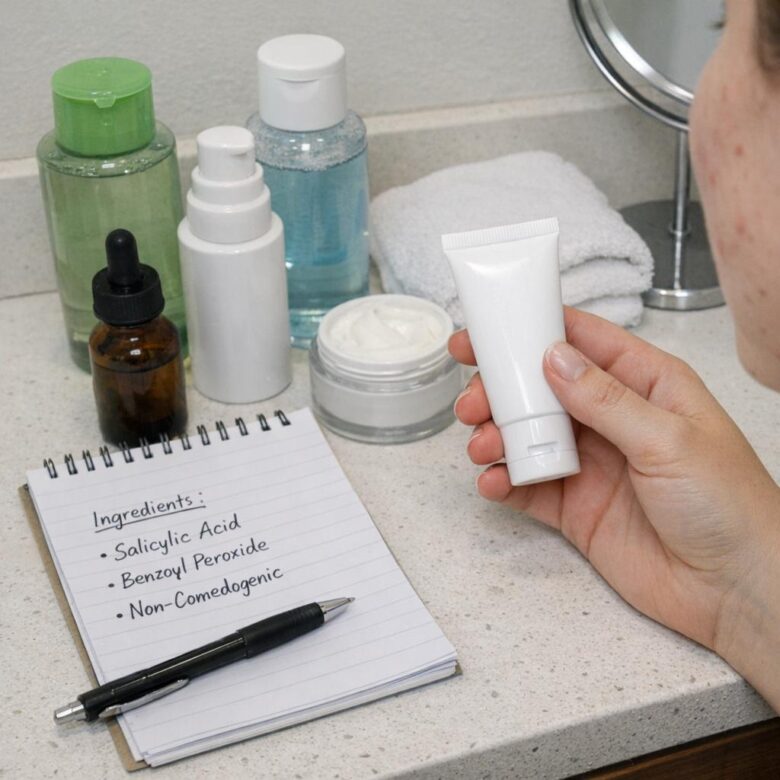
- Helpful ingredients: salicylic acid, benzoyl peroxide, adapalene, niacinamide, ceramides, and zinc.
- Barrier red flags: burning after moisturizer, tightness after washing, flaking, and sudden sensitivity.
In real life, many people worsen acne by combining too many “active” products at once. For example, using a benzoyl peroxide wash, exfoliating toner, retinoid serum, and clay mask in the same week can damage the barrier and create more redness, clogged pores, and irritation. A smarter approach is to use one acne-focused treatment, pair it with a gentle cleanser and barrier-repair moisturizer, then adjust slowly if your skin tolerates it.
How to Read Skincare Labels for Acne-Safe Cleansers, Moisturizers, and Treatments
When choosing acne-safe skincare products, start with the front label but make your decision from the ingredient list. Terms like “oil-free,” “non-comedogenic,” and “dermatologist-tested” can be helpful, but they are not guarantees-especially if your skin reacts easily or you use prescription acne treatment.
For cleansers, look for gentle surfactants and avoid formulas that leave a heavy film. A real-world example: if a “hydrating acne cleanser” contains coconut oil or isopropyl myristate high on the label, it may feel smooth but can clog pores for some acne-prone skin types.
- Good signs: glycerin, ceramides, niacinamide, panthenol, salicylic acid, benzoyl peroxide.
- Use caution: coconut oil, cocoa butter, lanolin, heavy fragrance, denatured alcohol.
- For treatments: check active ingredient strength, directions, and whether it may increase dryness or sun sensitivity.
Moisturizers should support the skin barrier without feeling greasy. If you are using adapalene, tretinoin, or benzoyl peroxide, a lightweight moisturizer with ceramides and hyaluronic acid can reduce irritation and help you stay consistent with your acne treatment plan.
For quick checks, use tools like INCIDecoder or SkinSAFE to look up ingredients before buying. They are useful when comparing drugstore skincare products, medical-grade skincare, or higher-cost dermatologist-recommended brands, but your own skin history still matters most.
One practical tip: patch test new cleansers or moisturizers along the jawline for a few nights before applying them everywhere. It is cheaper than replacing your entire routine after a breakout.
Common Product Mistakes That Worsen Breakouts-and How to Fix Your Routine
One of the biggest mistakes with acne-prone skin is using too many “active” products at once: a salicylic acid cleanser, benzoyl peroxide spot treatment, retinol serum, and exfoliating toner in the same week. This can damage the skin barrier, making breakouts look redder, oilier, and more inflamed. A better acne skincare routine is simple: gentle cleanser, targeted treatment, oil-free moisturizer, and non-comedogenic sunscreen.
Another common issue is choosing products that feel “matte” but are loaded with drying alcohols or heavy fragrance. I often see people switch to harsh acne cleansers because their skin feels greasy, then their face starts peeling and producing even more oil. If that sounds familiar, use a mild gel cleanser and apply acne treatment only where needed, not like a full-face mask.
- Mistake: Skipping moisturizer because you have oily skin. Fix: Use a lightweight, non-comedogenic moisturizer with ceramides or niacinamide.
- Mistake: Changing products every few days. Fix: Track your routine for 4-6 weeks using an app like Skin Bliss before judging results.
- Mistake: Using pore-clogging makeup or sunscreen. Fix: Look for “oil-free,” “non-comedogenic,” and “fragrance-free” on the label.
If breakouts are painful, cystic, or leaving dark marks, it may be more cost-effective to book a dermatologist visit or use a telehealth dermatology service instead of buying random acne products. Prescription acne treatment can be cheaper long-term than a drawer full of half-used serums.
Closing Recommendations
Choosing skincare for acne-prone skin is less about chasing trends and more about making consistent, low-risk decisions. Prioritize non-comedogenic, gentle, and targeted formulas, then introduce one product at a time so you can judge how your skin responds. If breakouts worsen, irritation persists, or acne feels painful and deep, step back and seek professional guidance rather than adding more actives. The best routine is not the most complicated one-it is the one your skin can tolerate, repeat daily, and improve with over time. Start simple, track results, and let your skin’s response guide your next choice.